Table of Contents 12 sections
Bargaining in Darija is one of the most rewarding things you can learn before a trip to Morocco. In the souks, many prices are not written anywhere, the first price is an opening offer, and a friendly conversation is part of the deal. A few words of Moroccan Arabic change the whole experience: sellers relax, laugh, and often treat you less like a tourist and more like a guest.
This guide gives you everything you need: the numbers for prices, the mysterious ryal that Moroccans count in, twelve phrases for bargaining politely, a complete example conversation, and the places where you should not bargain at all. Every phrase has audio, so you can practise before you go.

Why bargaining in Darija works
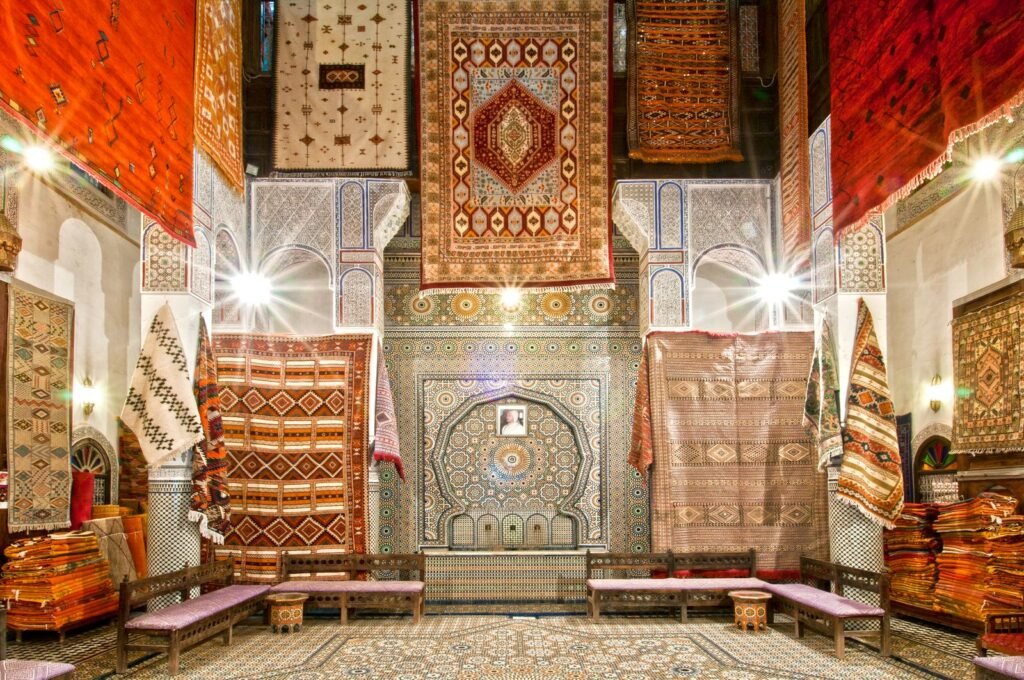
In the medinas of cities such as Marrakech and Fes, bargaining is a normal, expected part of buying crafts: carpets, leather, lamps, pottery, scarves and souvenirs. It is not an argument. It is a conversation, sometimes with mint tea, in which both sides try to reach a price they are happy with.
Bargaining in Darija, even with a few words, helps in three ways. First, it shows respect and curiosity, which makes the conversation warmer. Second, you understand the numbers when the seller says them, instead of relying on a calculator. Third, sellers quickly see that you know how things work, and the first price often becomes more reasonable.
Nothing guarantees a particular price, of course. The aim is not to “win”, but to pay a price that feels fair to you and to the seller, and to enjoy the exchange.
Numbers you need for prices
You do not need every number to bargain, but these fifteen cover most prices you will hear. For the full system, from 1 to 100, with Modern Standard Arabic and Darija side by side, see our guide to Arabic numbers.
| Darija | Say it | Meaning | Listen |
|---|---|---|---|
| واحد | wa7ed | one | |
| جوج | juj | two | |
| تلاتة | tlata | three | |
| ربعة | reb3a | four | |
| خمسة | khamsa | five | |
| ستة | stta | six | |
| سبعة | sb3a | seven | |
| تمنية | tmenya | eight | |
| تسعود | tes3ud | nine | |
| عشرة | 3eshra | ten | |
| عشرين | 3eshrin | twenty | |
| خمسين | khamsin | fifty | |
| مية | mya | one hundred | |
| ميتين | mitin | two hundred | |
| ألف | alf | one thousand |
Notice that Darija numbers differ from Modern Standard Arabic: two is juj, not ithnān, and nine is tes3ud. Prices are usually said with the number first and then the currency: 3eshrin derhem, twenty dirhams; mya derhem, a hundred dirhams. If you want to go further, our article on Arabic numbers from 1 to 100 includes a Darija section.
The hundreds you will hear in prices
Prices for crafts often run into the hundreds, and Darija joins the number directly to mya, a hundred. These forms come up constantly:
- مية mya: 100 · ميتين mitin: 200 · تلتمية tlatmya: 300
- ربعمية reb3emya: 400 · خمسمية khamsemya: 500 · ستمية sttmya: 600
- سبعمية sb3emya: 700 · تمنمية tmenmya: 800 · تسعمية tes3emya: 900
Listen for the start of the word: it tells you the hundreds, and the rest of the price follows with u, “and”. Many sellers also show the price on a calculator or write it down, which is a perfectly good way to check you heard correctly.
Dirhams and ryal: how Moroccans count money
Morocco’s currency is the dirham. That part is simple. What surprises visitors is that many Moroccans, especially in markets and especially older people, count prices in ryal, an old counting unit that is not printed on any coin or note.
The rule is: 1 dirham = 20 ryal. So when a seller says a price in ryal, divide it by 20 to get dirhams:
- mya ryal (100 ryal) = 5 dirhams
- mitin ryal (200 ryal) = 10 dirhams
- alf ryal (1,000 ryal) = 50 dirhams
The two systems are used side by side, and the same number can mean very different amounts. If a price sounds surprisingly high for something small, it may be in ryal. When in doubt, ask with a smile: بالدرهم ولا بالريال؟ bdderhem wla bryal?, in dirhams or in ryal? Sellers in tourist shops usually give prices in dirhams for foreigners, but knowing the rule saves you from confusion, and from paying twenty times too much or too little.
You will mostly handle notes of 20, 50, 100 and 200 dirhams, and coins of 1, 2, 5 and 10 dirhams, plus small centime coins. In the souks, small notes and coins are the most useful: paying for a 30-dirham item with a 200-dirham note can be difficult, and having close to the right amount ready also makes the end of a negotiation smoother. Many visitors keep their small money in one pocket and larger notes somewhere else, so that the price they agreed is the price they show.
| Darija | Say it | Meaning | Listen |
|---|---|---|---|
| درهم | derhem | dirham (plural: drahem) | |
| ريال | ryal | ryal: a counting unit, 20 ryal = 1 dirham | |
| الفلوس | lflus | money | |
| الصرف | ssarf | change (coins and small notes) | |
| الثمن | ttaman | the price | |
| غالي | ghali | expensive | |
| رخيص | rkhis | cheap |

Twelve phrases for bargaining in Darija
These twelve phrases for bargaining in Darija take you from the first question to the final handshake. Learn the first four well; the others make you sound polished.
| Darija | Say it | Meaning | Listen |
|---|---|---|---|
| بشحال هاد الشي؟ | bsh7al had shi? | How much is this? | |
| غالي بزاف | ghali bzzaf | That’s too expensive. | |
| نقص شوية | nqes shwiya | Bring it down a little. | |
| عطيني ثمن مزيان | 3tini taman mzyan | Give me a good price. | |
| آخر ثمن؟ | akhir taman? | What’s your last price? | |
| ما عنديش بزاف ديال الفلوس | ma 3endish bzzaf dyal lflus | I don’t have much money. | |
| غادي نشوف ونرجع | ghadi nshuf w nerje3 | I’ll look around and come back. | |
| صافي، ناخدها | safi, nakhudha | OK, I’ll take it. (feminine noun) | |
| صافي، ناخدو | safi, nakhdu | OK, I’ll take it. (masculine noun) | |
| واش كاين الصرف؟ | wash kayn ssarf? | Do you have change? | |
| دير الكونطور عافاك | dir lkontor 3afak | Please turn on the meter. (taxi) | |
| شكرا، الله يعاونك | shukran, llah y3awnek | Thank you, may God help you. (a kind goodbye to a seller) |
A note on nakhudha and nakhdu: Darija nouns are masculine or feminine, and “it” changes with them. A carpet, zerbiya, is feminine, so you say nakhudha; a lamp, fanus, is masculine, so you say nakhdu. If you are not sure, either one will be understood with a smile and a nod.
How to bargain politely, step by step
- Greet first. Start with salam and, if you like, a few words from our guide to Moroccan Darija greetings. Walking in and asking a price straight away feels abrupt.
- Look and ask. Show interest without too much excitement, then ask bsh7al had shi?
- React calmly. If the price is high, a relaxed ghali bzzaf is enough. There is no need for drama.
- Make your offer. Say a price you would genuinely pay. There is no fixed rule for how low to start; it depends on the item, the shop and how much you want it.
- Meet in the middle. The seller will come down, you will come up. Nqes shwiya and akhir taman? keep things moving.
- Decide. Either safi, nakhudha, or a polite ghadi nshuf w nerje3. Walking away politely is completely acceptable.
- Close warmly. Pay, shake hands if offered, and say shukran, llah y3awnek.
One golden rule: only start bargaining if you really might buy. Agreeing on a price and then leaving is considered rude, because the seller has spent time and effort on you.
Body language and tone
How you bargain matters as much as the words. Keep your voice relaxed and friendly, smile, and take your time. Pick items up gently and put them back where they were. If a seller offers you a glass of mint tea while you talk, it is a kind gesture of hospitality; accept or refuse politely, but be honest with yourself about whether you are really interested, so that nobody’s time is wasted.
Humour helps. Moroccan sellers often joke during a negotiation, and laughing along, or answering with a light ghali bzzaf, a khuya!, “too expensive, my brother!”, keeps the atmosphere warm. A negotiation that ends without a sale but with a smile is still a good conversation.
What to say if you feel pressured
In busy souks you may be invited into many shops. You never have to go in, and you never have to buy. These short phrases let you say no kindly:
- لا، شكرا la, shukran: no, thank you.
- غير كنشوف ghir kanshuf: I’m just looking.
- ما بغيتش، شكرا ma bghitsh, shukran: I don’t want it, thank you.
- من بعد، إن شاء الله men b3d, inshallah: later, God willing.
Said with a smile and while walking on, these phrases are understood everywhere, and most sellers will simply wish you a good day.

A complete bargaining conversation
Here is an example of how a friendly exchange over a small rug might go. The prices are only examples to practise the numbers, not a guide to what things cost.
- You: السلام عليكم ssalamu 3alaykum. Hello.
- Seller: وعليكم السلام، مرحبا wa 3alaykum ssalam, mer7ba. Hello, welcome.
- You: بشحال هاد الزربية؟ bsh7al had zzerbiya? How much is this rug?
- Seller: ألف درهم alf derhem. A thousand dirhams.
- You: غالي بزاف. ستمية؟ ghali bzzaf. sttmya? That’s too expensive. Six hundred?
- Seller: لا، ما يمكنش. تسعمية la, ma ymkensh. tes3emya. No, that’s not possible. Nine hundred.
- You: نقص شوية، عطيني ثمن مزيان nqes shwiya, 3tini taman mzyan. Come down a little, give me a good price.
- Seller: آخر ثمن: تمنمية akhir taman: tmenmya. Last price: eight hundred.
- You: صافي، ناخدها safi, nakhudha. OK, I’ll take it.
- Seller: مبروك عليك mabruk 3lik. Congratulations, enjoy it.
- You: الله يبارك فيك llah ybarek fik. Thank you (God bless you).
Notice the hundreds: sttmya (six hundred), tes3emya (nine hundred) and tmenmya (eight hundred) join the number to mya. And notice the happy ending: mabruk, said when you buy something new, answered with llah ybarek fik.
When not to bargain
Bargaining is for the souks and for crafts. In many places prices are fixed, and trying to bargain there would be strange or rude:
- supermarkets, pharmacies and modern shops with price tags;
- cafés and restaurants with a menu;
- fixed-price craft shops, often run by cooperatives, where prices are marked;
- bread, vegetables and everyday food bought in small amounts, where prices are already low and the margin is small;
- museums, monuments and official tickets.
When you are not sure, look for price tags and watch what local customers do. If everyone pays without discussion, so should you.

Taxis, change and small purchases
Two more situations use the same Darija. In cities, petits taxis have a meter, called lkontor in Darija. A polite dir lkontor 3afak, “please turn on the meter”, at the start of the ride is normal and avoids any discussion at the end. If a driver prefers a fixed price, agree on it before you get in.
Small change is precious in Morocco, and many small shops and taxis struggle to break large notes. Keep coins and small notes with you, and when you need change, ask wash kayn ssarf? before you hand over a big note.
For more phrases for taxis, cafés, directions and your riad, see our Darija phrases for travellers, and plan your route with our Morocco travel guide. Before you go, our free Darija test shows you how much you already understand.
Frequently asked questions
Is bargaining rude in Morocco?
No. In the souks it is expected, as long as it stays friendly and you only bargain for things you might really buy. It is not done in shops with price tags, cafés or supermarkets.
How many ryal are in a dirham?
Twenty. So 100 ryal is 5 dirhams and 1,000 ryal is 50 dirhams. Many Moroccans count in ryal in markets, so it is worth asking “in dirhams or in ryal?” when a price sounds strange.
How much should I offer when bargaining?
There is no fixed rule. Offer a price you would genuinely be happy to pay, then meet the seller somewhere in the middle. Comparing prices in a few shops first helps a lot.
Do I need to speak Darija to bargain?
No, many sellers in tourist areas speak French, English or Spanish. But a few Darija phrases make the exchange friendlier and help you understand the numbers.
Are the audio clips spoken by a Moroccan?
No, the clips are computer-generated so you can practise right away. Use them as a guide and listen to Moroccans in the market.