Table of Contents 17 sections
Open a Moroccan group chat and you might see messages like slam, labas? 3afak 3ayet liya. These are not typing errors. This is Darija in Latin letters, the way millions of Moroccans write their spoken language every day, with numbers standing in for Arabic sounds that the Latin alphabet does not have.
In this guide you will learn what 3, 7 and 9 mean, how Moroccans spell the other difficult sounds, why spellings change from one person to the next, and how to read and write real messages. Every example has the Arabic script next to it, so you learn both systems together.
Why Moroccans write Darija in Latin letters
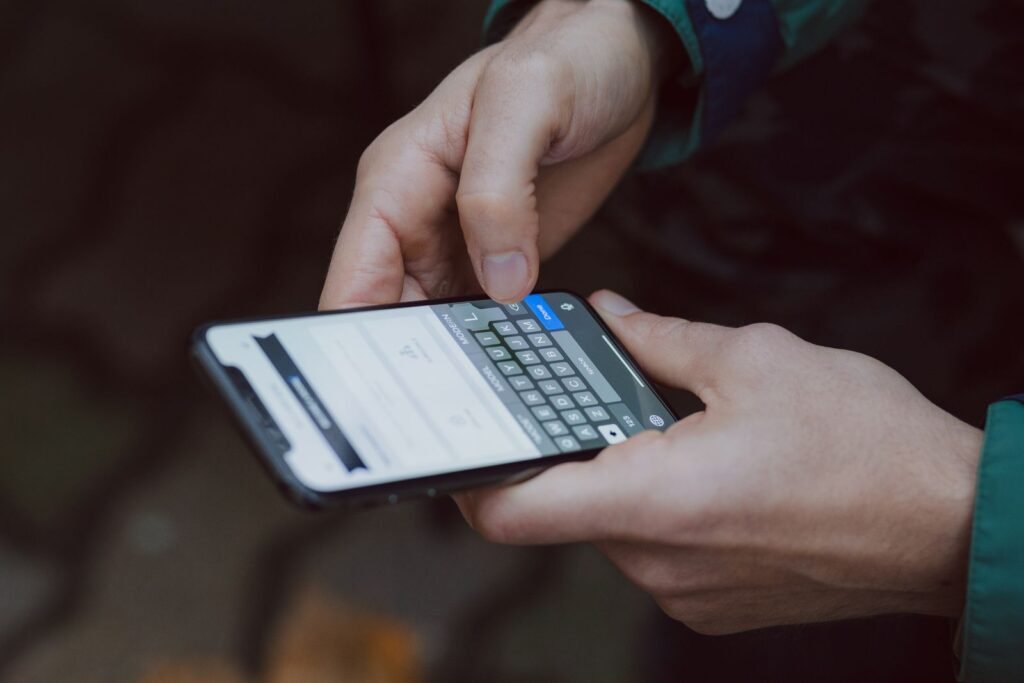
Darija is mainly a spoken language. For formal writing, Moroccans use Modern Standard Arabic or French, and Darija never had one official spelling. When mobile phones and the internet arrived, many keyboards had only Latin letters, and many Moroccans had learned French at school. Writing Darija “as it sounds” with the Latin alphabet was the natural solution. Text messages were also short and often limited in length, so a quick, flexible spelling suited them perfectly, and the habit spread from phones to chat apps and social media.
The same thing happened across the Arab world, where this way of writing is often called Arabizi or the Arabic chat alphabet. Today Arabic keyboards are everywhere, and many Moroccans write Darija in Arabic script too, but Latin-letter Darija remains extremely common in messages, comments, social media and even some adverts.
For learners, this is good news. Darija in Latin letters lets you start reading and writing real Moroccan messages before you have mastered the Arabic script. But it works best when you also know the Arabic letters behind it, which is why we show both throughout this guide.
Where you will see it
Once you know the system, you will notice Darija in Latin letters everywhere: in WhatsApp and Messenger chats, in comments under Moroccan videos and posts, in the titles of YouTube videos, in song lyrics shared online and in some adverts aimed at young people. It is the informal written voice of the country. Signs, official documents, newspapers and menus, on the other hand, use Arabic script, French, or both.
The numbers: 3, 7 and 9
Three Arabic sounds have no close equivalent in English or French, so Moroccans use digits that look a little like the Arabic letters:
- 3 = ع (ʿayn): a deep sound made in the throat. The digit 3 looks like a mirror image of the letter.
- 7 = ح (ḥāʾ): a breathy h, like the sound you make when you fog up a mirror, but stronger. The 7 resembles the letter’s shape.
- 9 = ق (qāf): a k sound made further back in the throat. The 9 looks a little like the letter.
Listen to each example and notice the sound the number represents. The clips are computer-generated, so use them as a guide and listen to Moroccan speakers whenever you can.
| Example | In Latin letters | Letter and meaning | Listen |
|---|---|---|---|
| عافاك | 3afak | 3 = ع (ʿayn): please | |
| علاش | 3lash | 3 = ع: why | |
| حتى أنا | 7tta ana | 7 = ح (ḥāʾ): me too | |
| بشحال | bsh7al | 7 = ح: how much | |
| قريب | 9rib | 9 = ق (qāf): near, close | |
| الطريق | ttri9 | 9 = ق: the road, the way |
You may sometimes see other digits, such as 2 for the glottal stop ء or 5 for خ, especially in messages from other Arab countries. In Morocco, 3, 7 and 9 are the ones you really need; the other sounds are usually written with letter pairs.
Letter pairs and French spellings
For the remaining difficult sounds, Darija in Latin letters uses pairs of letters. Because many Moroccans learned to write in French, French spelling habits are common too, which is why the same word can appear in two or three spellings.
| Example | In Latin letters | Letter and meaning | Listen |
|---|---|---|---|
| غادي | ghadi | gh = غ (ghayn): going to, will | |
| خويا | khoya / khuya | kh = خ (khāʾ): my brother | |
| شكرا | shukran / chokran | sh or ch = ش (shīn): thank you | |
| شنو | shnu / chno | sh or ch = ش: what | |
| واش | wash / wach | w = و, sh or ch = ش: question word | |
| بزاف | bzzaf / bezzaf | double letter = a doubled sound: a lot |
- gh stands for غ, a sound like a French r at the back of the throat: ghadi, ghda (tomorrow).
- kh stands for خ, like the ch in Scottish “loch”: khoya, khobz (bread).
- ch and sh both stand for ش, the English “sh”. Writers who learned French tend to use ch: chokran, chno, wach. Others write shukran, shnu, wash.
- ou and u both stand for the “oo” sound, again because of French: kolchi or kulshi, everything.
- Doubled letters show a doubled sound, the shadda of Arabic script: bzzaf, ssuq (the market).
What Darija in Latin letters does not show
Darija in Latin letters is quick and practical, but it leaves some things out. Knowing what is missing helps you read more accurately.
The emphatic letters
Arabic has “heavy” versions of s, t, d and z: ص, ط, ض and ظ. In Latin-letter Darija they are usually written exactly like the light ones, so tri9 can hide a ط, and sa7bi starts with a ص. Some learners and teachers write them in capitals, such as S, T and D, but most Moroccans do not.
Vowels
Darija has few clear short vowels, and people write them very freely. The same word may appear as nchofk, nshofk or nchoufek. Do not worry about the vowels; focus on the consonants, which carry the meaning.
Word boundaries
Small words like f (in), l (to, the) and w (and) are sometimes joined to the next word and sometimes not: f ttri9 or fttri9. Read the sentence aloud and the words usually separate themselves.
Read real messages in Darija
Here are eight messages of the kind you might receive from Moroccan friends. Try to read the Latin version first, then check it against the Arabic script and the meaning. Notice how the numbers, the ch and the doubled letters appear in everyday use.
| Darija in Arabic script | As Moroccans text it | Meaning | Listen |
|---|---|---|---|
| سلام، لاباس؟ فين نتا؟ | slam, labas? fin nta? | Hi, how are you? Where are you? | |
| أنا فالطريق، غادي نوصل دابا | ana f ttri9, ghadi nwsel daba | I’m on the way, I’ll be there soon. | |
| شكرا بزاف على كلشي | chokran bzzaf 3la kolchi | Thanks a lot for everything. | |
| واش نتا مزيان؟ | wach nta mzyan? | Are you OK? | |
| عافاك عيط ليا منين توصل | 3afak 3ayet liya mnin twsel | Please call me when you arrive. | |
| نشوفك غدا إن شاء الله | nchofk ghda inchallah | See you tomorrow, God willing. | |
| حتى أنا | 7tta ana | Me too. | |
| أنا قريب | ana 9rib | I’m close. |
A few new words appear here: 3ayet, to call (on the phone); mnin, when; kolchi, everything; and ghda, tomorrow. If some greetings are new to you, our guide to Moroccan Darija greetings explains labas and the replies people expect.

One word, many spellings
Because everyone writes Darija the way it sounds to them, you will meet the same word in several forms. Recognising the common variants saves a lot of confusion. Here are some you will see constantly:
- واخا OK: wakha, wakhha and also wa5a, where some writers use 5 for خ.
- إن شاء الله God willing: inchallah, inshallah, nchallah.
- مزيان good: mzyan, mzian, mezyan.
- لاباس fine, how are you: labas, labass, la bas.
- شكرا thank you: chokran, shukran, choukran.
- دابا now: daba, dba.
- كلشي everything: kolchi, kulshi, koulchi.
The lesson is simple: read for the consonants and the overall sound, not for exact letters. If you read a word aloud and it sounds like a word you know, it probably is that word.
French in Darija messages
Moroccan messages often mix Darija with French, and sometimes English, in the same sentence. You will see merci bzzaf, “thanks a lot”, d’accord, nchofk ghda, “OK, see you tomorrow”, or ça va? labas?. This mixing is completely normal in Morocco, especially in cities. As a learner, you do not need to copy it, but recognising it helps you understand real conversations.
Practise: decode these words
Try to read these five words aloud, then work out the Arabic letter behind each number. Open the answers when you are ready.
- 3afak · m3a · sa7bi · 9ahwa · 7ta
Show the answers
3afak (عافاك, please) and m3a (مع, with) use 3 for ع; sa7bi (صاحبي, my friend) and 7ta (حتى, until, even) use 7 for ح; 9ahwa (قهوة, coffee) uses 9 for ق.
How to write your own messages
Once you can read Darija in Latin letters, writing it is easy. A few simple rules will make your messages clear to any Moroccan:
- Write what you hear. There is no official spelling, so spell the word the way it sounds.
- Use 3, 7 and 9 for those three sounds. They are understood everywhere in Morocco.
- Use gh and kh for غ and خ, and choose either ch or sh for ش. Both are fine; just be consistent.
- Double a letter when the sound is doubled: bzzaf, ttri9.
- Keep sentences short. Darija messages are naturally brief: wakha, safi, ana 9rib.
Moroccans are used to many styles of Darija in Latin letters, so even an imperfect message will be understood, and most people will be delighted that you are writing to them in Darija.
Latin letters or Arabic script: which should you learn?
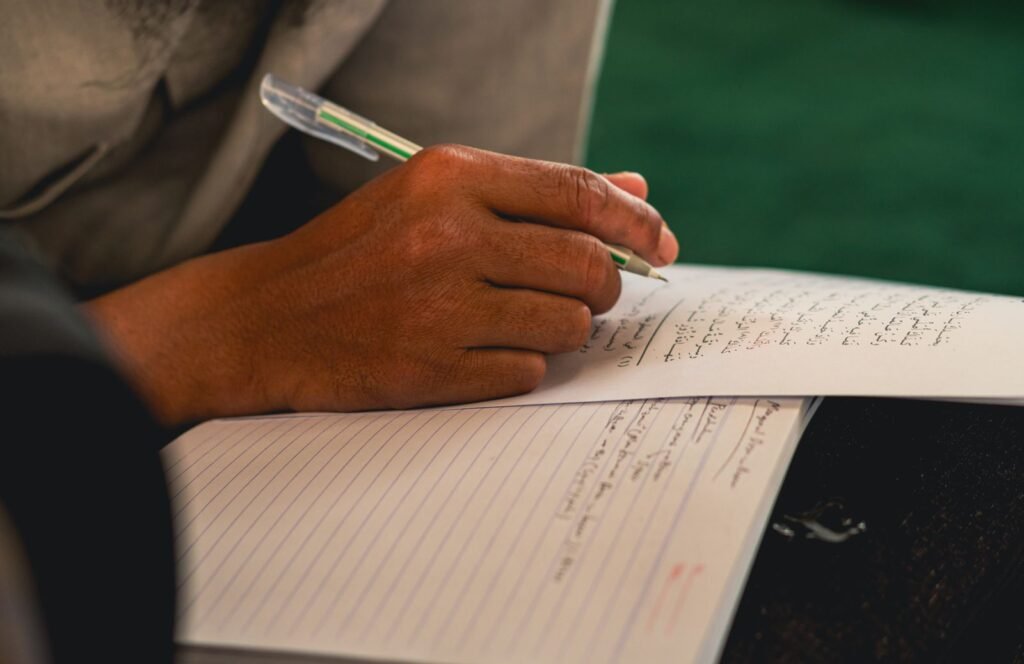
Ideally both, but for different purposes. Darija in Latin letters is perfect for text messages, social media and taking quick notes of new words. The Arabic script is essential for reading signs, menus, shop fronts and anything written in Modern Standard Arabic, and many Moroccans now text in Arabic script as well.
Learning the Arabic letters also makes Darija in Latin letters much clearer, because you know which real letter hides behind each spelling. If you have not learned the script yet, our course to learn to read Arabic takes you there in six stages, and our alphabet workbook gives you guided writing practice for every letter.
A simple routine with both scripts
Many of our students find this routine helpful. Each time you learn a new Darija word, write it three times: once in Arabic script, once in Latin letters with the numbers, and once in a short sentence of your own. For example: عافاك, 3afak, 3afak, bghit atay. After a few weeks, you will read both systems without effort, and you will notice that the Arabic spelling helps you remember the exact sound, while the Latin spelling helps you type quickly to Moroccan friends.
Typing Arabic script on your phone
If you want to write Darija in Arabic script, add an Arabic keyboard in your phone’s language or keyboard settings; both Android and iPhone include one. You can then switch between the Latin and Arabic keyboards with a single tap, as many Moroccans do several times in the same conversation. At first the Arabic layout feels slow, but because Darija words are short, a few days of practice with simple messages such as لاباس and شكرا is usually enough to find the most common letters without searching. Typing also reinforces the letter shapes you learn in a workbook, so the two kinds of practice support each other.
When you are ready to see how much Darija you understand, try our free Darija test: every question shows Darija in Arabic script and in Latin letters, exactly as described in this guide. For phrases you can use on a trip, see our Darija phrases for travellers.
Frequently asked questions
What does 3 mean in Darija?
In Darija written in Latin letters, 3 stands for the Arabic letter ع (ʿayn), as in 3afak, please, and 3lash, why.
What do 7 and 9 mean in Moroccan texting?
7 stands for ح (ḥāʾ), as in bsh7al, how much, and 9 stands for ق (qāf), as in 9rib, near.
Is it ch or sh in Darija?
Both are used for the same sound, ش. Writers influenced by French usually write ch (chokran), others write sh (shukran). Either is correct.
Is there an official way to write Darija?
No. Darija has no official spelling in Latin letters, and people write it the way it sounds to them, so spellings vary.
Are the audio clips recorded by a Moroccan?
No, the clips in this article are computer-generated so you can hear each example right away. Use them as a guide and listen to native speakers whenever you can.