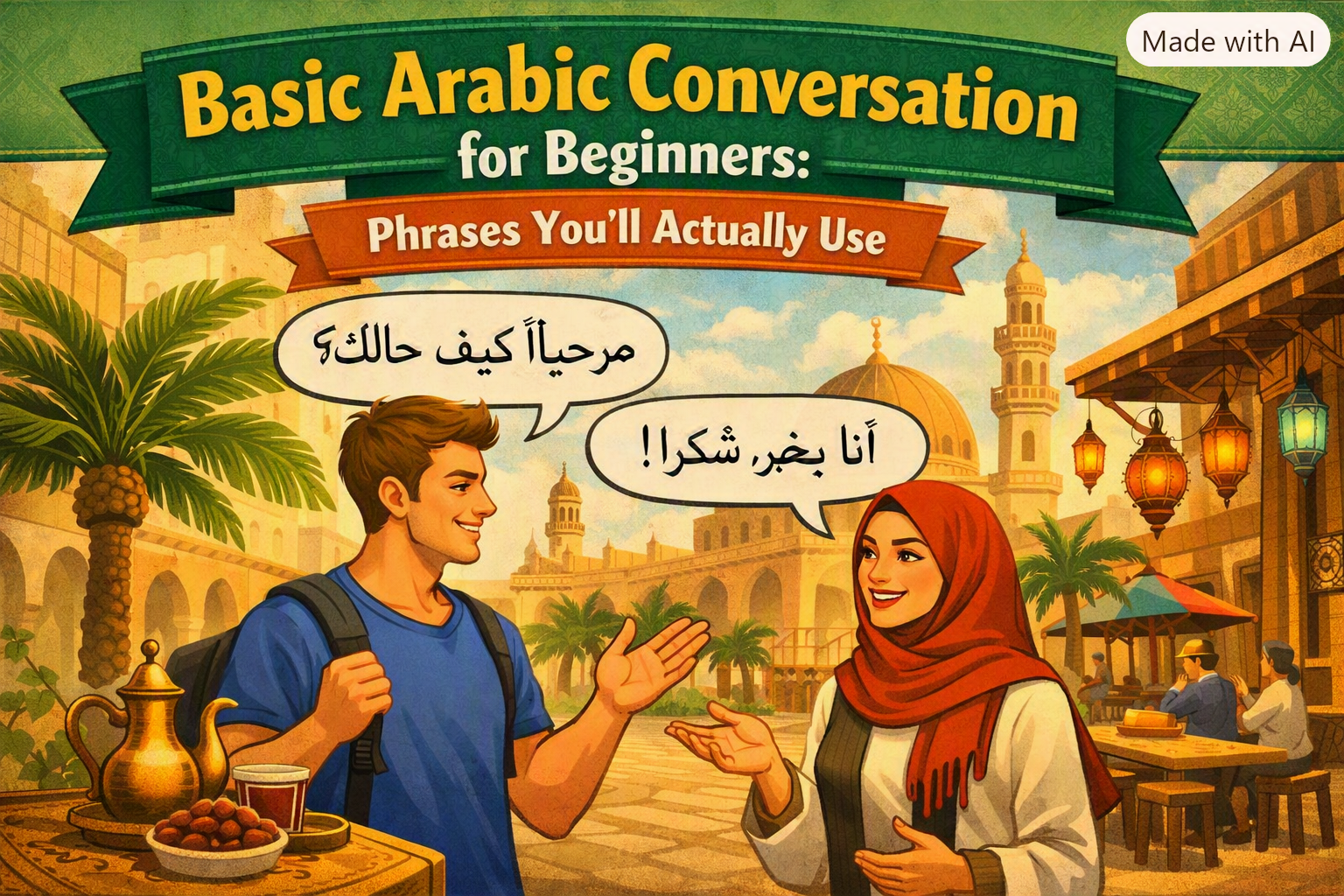
You don’t need a full grammar course to start holding a conversation in Arabic — you need about thirty reliable phrases and the confidence to use them. This guide collects the exact building blocks beginners lean on most: greetings, introductions, polite expressions, numbers, and the handful of questions that keep a conversation moving.
Everything below is written in Modern Standard Arabic (MSA), the form understood across every Arabic-speaking country, with a note at the end on how it shifts once you step into a specific dialect.
مGreetings and goodbyes
Every conversation starts here, and these are the phrases you’ll hear and use the most — several times a day, in almost any setting.
أIntroducing yourself
Arabic marks “you” for gender — -َكَ (-ka) when speaking to a man, -كِ (-ki) when speaking to a woman.
حAsking how someone is
شEveryday polite phrases
؟Question words that unlock conversation
Learn these seven words and you can build dozens of useful questions on the spot, just by attaching them to a verb or noun you already know.
٣Numbers zero to ten
Numbers come up constantly — prices, phone numbers, ages, quantities — and they’re worth drilling early.
💬A full sample exchange
Here’s how several of these phrases string together in a real first meeting:
Notice how little vocabulary this actually took — five short exchanges, all built from the tables above.
عMSA vs. the dialect you’ll actually hear
Modern Standard Arabic is the version used in news, books, and formal speech everywhere — it’s understood in every Arabic-speaking country, which makes it the right starting point. But day-to-day street conversation runs on regional dialects, which shorten and reshape many of these same phrases.
A simple example: the MSA phrase كيف حالك؟ (kayfa ḥāluka?) becomes كيف داير؟ in Moroccan Darija or إزيك؟ in Egyptian Arabic. The underlying question is identical — only the packaging changes.
؟Frequently asked questions
Should I learn MSA or a dialect first for conversation?
Start with MSA basics like the ones in this guide — they’re understood everywhere and give you a stable foundation. Once you know which country or community you’ll actually be speaking with, layer in that dialect’s specific shifts.
How many phrases do I need to hold a basic conversation?
Roughly 25–30 solid phrases — greetings, introductions, a handful of question words, and polite expressions — are enough to carry a genuine first conversation, as the sample exchange above shows.
Is it rude to mix in English words when I don’t know a term?
Not at all — most native speakers appreciate the effort and will happily supply the word you’re missing. Phrases like “how do you say…?” or simply pausing are completely normal for learners.
What’s the fastest way to build speaking confidence?
Repetition out loud with a real or practice partner beats silent review every time. Try running the sample exchange above with a friend, swapping in your own name and city.
Do greetings differ much between Arabic-speaking countries?
The core MSA greetings above are recognized everywhere, but everyday warmth varies — some regions add extra blessings or repeat greetings back and forth several times before moving on, which is a sign of politeness, not impatience.
You might also like