
 9.7/10
Hands-on review
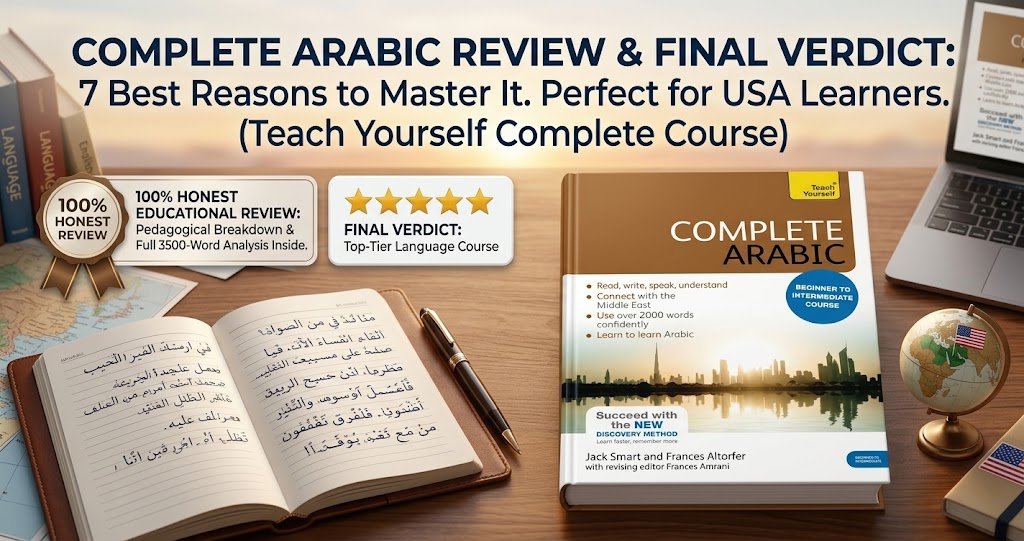
Mastering a new language often feels like navigating an uncharted landscape, especially when that language features a completely different script and grammatical structure. For adult learners in the United States, finding the right starting point remains the biggest hurdle to achieving fluency. You need a comprehensive, well-structured resource that removes the guesswork and builds your confidence from day one. This brings us to a highly anticipated educational tool that completely transforms the self-study experience. The Teach Yourself series has long held a reputation for excellence, and their Arabic Beginner to Intermediate Course stands out as a premier investment for anyone serious about unlocking this beautiful, complex language. Check today’s price on Amazon
By integrating reading, writing, listening, and speaking into one cohesive curriculum, this product delivers a masterclass in language acquisition directly to your desk. You immediately notice the logical progression of the lessons, designed specifically to prevent the overwhelm that typically causes beginners to quit. Instead of bombarding you with disconnected vocabulary, the authors contextualize every new word and grammar rule within authentic scenarios. Therefore, whether your goal involves traveling across the Middle East, advancing your international career, or connecting with Arabic-speaking communities back home, this course equips you with the practical tools necessary for real-world communication.
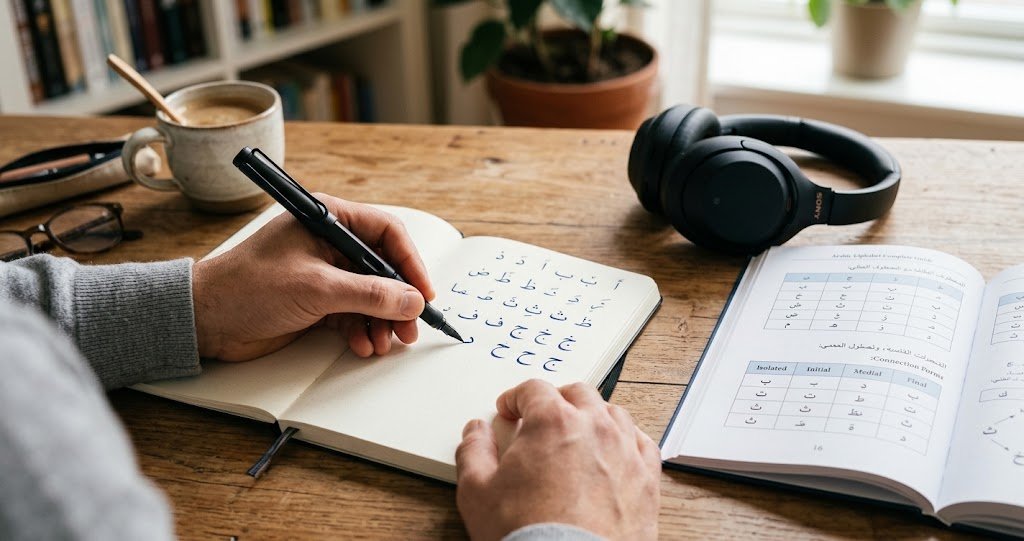
Starting your linguistic journey requires courage, particularly when facing a right-to-left script. Many American students feel intense hesitation before tackling the Arabic alphabet. They falsely believe that mastering the script will take years of grueling memorization.
The Arabic Beginner to Intermediate Course shatters this misconception entirely. The authors introduce the alphabet systematically, breaking the 28 letters down into manageable, visually intuitive groups. You learn to recognize the changing shapes of the letters as they connect at the beginning, middle, and end of words.
Consequently, you build visual recognition rapidly. The textbook provides ample tracing and writing exercises, forcing your brain to actively engage with the new symbols. This tactile approach accelerates your muscle memory, making the transition from English script surprisingly smooth.
Furthermore, the course tackles pronunciation right alongside the writing system. You do not just learn what a letter looks like; you learn exactly how to produce sounds that do not exist in the English phonetic inventory. By blending script acquisition with audio reinforcement, the curriculum ensures you develop accurate pronunciation habits immediately.
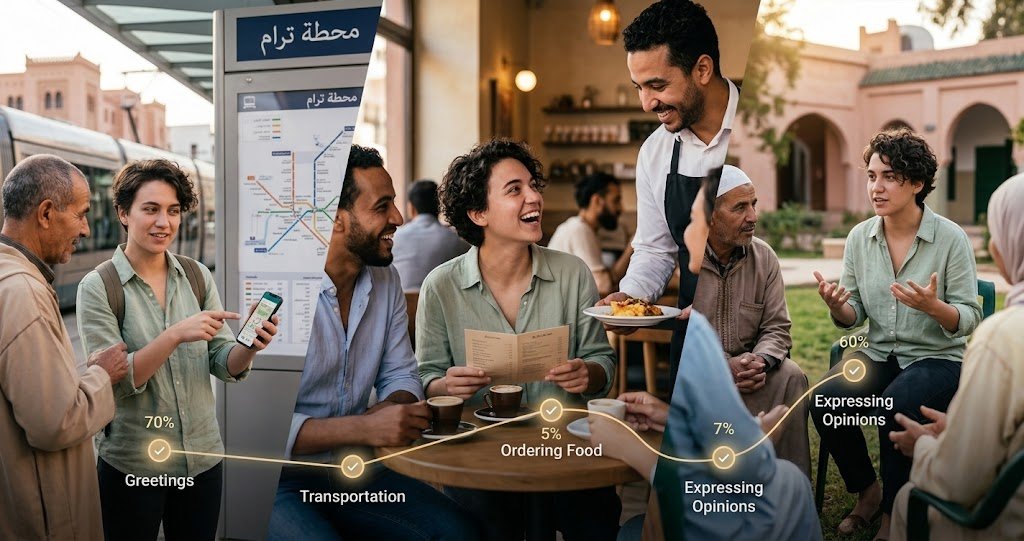
Theoretical knowledge holds little value if you cannot use it in a real conversation. Academic textbooks often trap students in endless grammar drills, leaving them speechless when they actually encounter a native speaker.
Fortunately, this course prioritizes communicative competence above all else. The authors structure every unit around highly practical, everyday themes. You learn to introduce yourself, navigate transportation, order food, and express your opinions confidently.
Active recall forms the backbone of these thematic units. The exercises prompt you to formulate your own sentences rather than simply translating provided text. This active engagement forces your brain to retrieve vocabulary and apply grammar rules dynamically.
Moreover, the progression feels incredibly natural. You start with foundational survival phrases and gradually advance into expressing nuanced thoughts and complex ideas. This seamless pacing keeps your motivation high, as you can clearly track your tangible progress after completing each chapter.
Arabic grammar possesses a reputation for being heavily structured and deeply mathematical. The root system, where words derive from three-letter consonant clusters, can confuse newcomers who try to apply English grammatical logic to it.
This resource handles grammar instruction with absolute brilliance. Instead of throwing a massive reference book at you, the authors introduce grammatical concepts incrementally. You learn a rule precisely when you need it to express a specific idea.
For example, when you learn how to talk about your daily routine, the course naturally introduces present tense verb conjugations. This contextualized learning makes abstract rules immediately concrete and applicable. You understand the “why” behind the grammar, rather than just memorizing tables by rote.
Additionally, the explanations remain refreshingly clear and free of overly dense academic jargon. The authors understand the perspective of the English-speaking learner. They proactively highlight common pitfalls and explain how Arabic structures differ from what you instinctively expect.
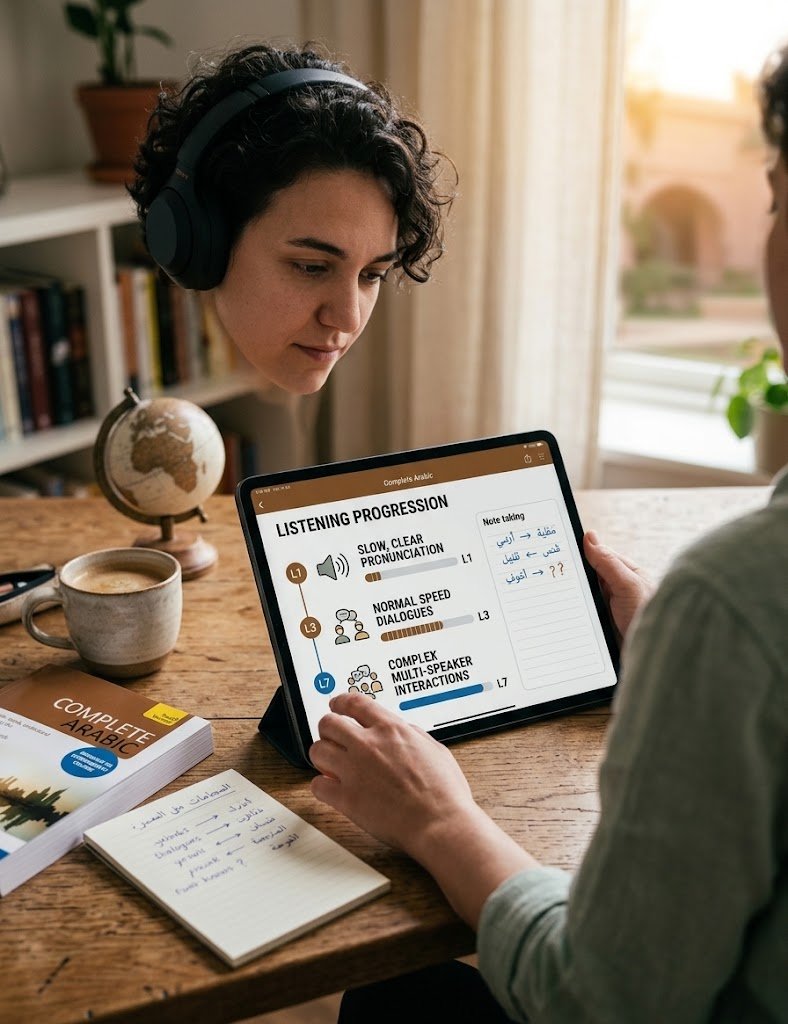
Reading and writing only represent half of the language equation. True fluency demands the ability to understand spoken Arabic in real-time, often delivered at a rapid pace.
The Arabic Beginner to Intermediate Course excels in building your listening endurance. The accompanying audio materials feature native speakers conversing in realistic, unscripted-sounding dialogues. You hear the natural rhythm, intonation, and emotional inflection of the language.
Initially, these dialogues might seem fast. However, this intentional design choice trains your ear to process normal conversational speeds. You learn to listen for key vocabulary words and contextual clues, rather than trying to translate every single syllable in your head.
Furthermore, the audio tracks offer varying degrees of complexity. You begin with slow, clear pronunciations and gradually advance to more complex, multi-speaker interactions. This steady escalation prevents frustration while constantly pushing the boundaries of your comprehension skills.
Language and culture remain inextricably linked. You cannot truly master Arabic without understanding the cultural nuances that shape how people communicate across the Arab world.
This textbook weaves cultural insights directly into the language lessons. You learn about appropriate greetings, social etiquette, and regional customs. This knowledge prevents you from making awkward social faux pas when interacting with native speakers.
For professionals and travelers from the USA, this cultural fluency holds immense value. It demonstrates respect and deepens the connections you make. Whether you are conducting business in Dubai or navigating a market in Cairo, understanding the cultural backdrop gives you a significant advantage.
The authors also address the concept of Modern Standard Arabic (MSA) versus regional dialects. They clarify that while this course focuses on MSA—the universal language of media, literature, and formal communication—they provide the foundational understanding necessary to branch out into specific dialects later.
Adult learners juggle demanding careers, family obligations, and tight schedules. Attending a rigid university class is often impossible. Therefore, a self-study resource must offer flexibility without sacrificing rigor.
The structure of this product perfectly accommodates the busy American lifestyle. The units remain compartmentalized and highly digestible. You can easily complete a single exercise or review a grammar point during a quick thirty-minute study session.
This bite-sized approach encourages consistency, which serves as the ultimate catalyst for language acquisition. You do not need to block out massive three-hour study windows. By interacting with the material daily, even in short bursts, you maintain your momentum and solidify your memory retention.
Moreover, the built-in assessments allow you to test your knowledge independently. You receive immediate feedback through the answer keys, allowing you to identify weak spots and review specific sections before moving forward. You become the master of your own learning timeline.
Purchasing a comprehensive course saves you significant money compared to hiring a private tutor or enrolling in a formal institution. However, the value you extract depends entirely on how effectively you use the material.
To maximize your results, you must engage with all facets of the curriculum simultaneously. Do not skip the writing exercises just because you prefer speaking. Do not ignore the audio tracks just because you read well.
Embrace a multi-sensory study routine. Read the dialogues out loud. Write new vocabulary words by hand. Listen to the audio while commuting. By attacking the language from multiple angles, you build stronger, more resilient neural pathways.
Ultimately, this course provides everything you need to succeed. It removes the friction from the learning process, offering a clear, expertly illuminated path from complete novice to capable, intermediate speaker.
Choosing the right foundational tool dictates the entire trajectory of your language journey. The Teach Yourself Arabic Beginner to Intermediate Course completely overdelivers by combining clear grammar instruction, culturally rich dialogues, and exceptional audio resources. It eliminates the guesswork and frustration typically associated with tackling this complex language, presenting the material in a logical, engaging, and highly digestible format tailored perfectly for independent adult learners in the USA. By prioritizing practical communication and active recall, this product ensures you build an unshakable foundation. If you are serious about bypassing digital distractions, mastering the script, and achieving genuine communicative confidence, this comprehensive course stands as an indispensable, top-tier investment that will accelerate your progress and unlock a new world of opportunities.
Is this course suitable for someone who has absolutely zero background in Arabic?
Absolutely. The curriculum is specifically engineered for complete beginners. It starts by introducing the alphabet and basic phonetics, assuming no prior exposure to the language. You will build your skills progressively from the ground up.
Does this course teach Modern Standard Arabic (MSA) or a specific dialect?
This course focuses primarily on Modern Standard Arabic (MSA). MSA is the formal standard used in writing, news media, literature, and formal speeches across the entire Arab world. Mastering MSA provides the strongest possible foundation before you eventually specialize in a regional dialect (like Egyptian or Levantine).
How long does it take to complete the entire course?
The timeline varies heavily depending on your personal study schedule. If you dedicate 30 to 45 minutes a day to active study, most learners can work through the core material comfortably within three to six months. Consistency matters much more than marathon study sessions.
Are the audio materials included, or do I need to buy them separately?
This depends on the specific listing you select on Amazon, but generally, the “Complete Course” packages include access to the audio, either via physical CDs or digital downloads/streaming through the Teach Yourself app. Always verify the format on the product page before purchasing to ensure it matches your preferences.
Will this course make me completely fluent?
No single textbook will make you perfectly fluent. Fluency requires hundreds of hours of conversation with native speakers and immersive media consumption. However, this course will successfully take you to an intermediate level, allowing you to read confidently, express your thoughts clearly, and navigate most everyday situations with ease.
Overall score 9.5 / 10