The Arabic Alphabet: Learn, Practice & Master the Arabic Alphabet with Guided Writing & Letter Practice
As an Amazon Associate I earn from qualifying purchases.

Table of Contents 56 sections
Make learning the Arabic alphabet simple, structured, and engaging.
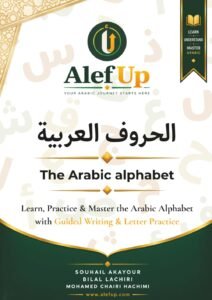
Product: The Arabic Alphabet: Learn, Practice & Master the Arabic Alphabet with Guided Writing & Letter Practice
Brand: AlefUp
Product type: Arabic alphabet handwriting and educational workbook
Best for: English-speaking beginners, adult learners, families, homeschoolers, and students who want to practice writing Arabic letters
Amazon marketplace: United States
Is The Arabic Alphabet Workbook Worth Considering?

“Check Today’s Price On Amazon”
Learning a new writing system can feel challenging at first, especially when the letters look unfamiliar and their shapes change depending on their position in a word. For English-speaking beginners, learning Arabic involves more than memorizing the alphabet. Students also need opportunities to recognize letter shapes, understand how letters connect, and develop the confidence to write them correctly. The Arabic Alphabet: Learn, Practice & Master the Arabic Alphabet with Guided Writing & Letter Practice is designed to help learners begin this process through structured explanations and handwriting practice. The workbook introduces the 28 letters of the Arabic alphabet, explains their different forms, and provides guided writing activities that help learners become more familiar with Arabic script.
For American parents, homeschooling families, adult language learners, and students exploring Arabic for personal, educational, cultural, or religious reasons, this workbook offers a practical starting point. Rather than relying entirely on videos or digital exercises, learners can work directly on the printed pages and develop familiarity through repetition. Its primary strength is its focused approach to letter recognition and writing practice. However, buyers should understand that an alphabet workbook is a foundation rather than a complete Arabic course. Students who want to develop pronunciation, listening comprehension, vocabulary, and conversational fluency will benefit from combining handwriting practice with audio resources, reading activities, and regular speaking practice.
Product Overview
Arabic is one of the world’s major languages, and learning its alphabet opens the door to a rich tradition of literature, communication, history, and culture. Nevertheless, beginners who speak English often need a clear introduction to the writing system before they can comfortably read simple words or begin writing independently.
This is where a dedicated Arabic alphabet workbook can be useful.
The Arabic Alphabet: Learn, Practice & Master the Arabic Alphabet with Guided Writing & Letter Practice focuses on the early stages of learning Arabic script. It introduces learners to the basic shapes of Arabic letters and provides opportunities to practice their written forms. The material is organized around the alphabet and its letter shapes, helping students approach an unfamiliar writing system one step at a time.
“Check Today’s Price On Amazon”
The workbook covers the 28 Arabic letters and introduces their independent, initial, medial, and final forms. These forms are important because Arabic letters do not always look exactly the same in every position. Understanding this feature early can help learners build a stronger foundation for reading and writing.
The guided writing approach also encourages active participation. Instead of simply looking at examples, learners can study the forms, follow the instructions, and practice reproducing the letters.
For someone starting from zero, this combination of explanation and practice can make the first stage of Arabic learning feel more manageable.
What Is Included in The Arabic Alphabet Workbook?
The workbook is designed around three connected learning goals: understanding Arabic letter shapes, becoming familiar with their different forms, and practicing how to write them.
1. An Introduction to the 28 Arabic Letters
The Arabic alphabet contains 28 basic letters. For English-speaking learners, recognizing these letters is the first step toward reading Arabic words.
The workbook introduces the alphabet and provides a starting point for recognizing the individual characters. This can help learners begin distinguishing one letter from another instead of treating Arabic script as a collection of unfamiliar symbols.
Consistent practice matters here. Some Arabic letters share similar basic shapes but differ in their dots or other visual details. Beginners need time to observe these differences and reproduce them accurately.
A structured alphabet workbook gives students a place to return to those examples as often as necessary.
2. An Explanation of Different Letter Forms
One of the most important features of Arabic writing is that many letters change shape according to their position in a word.
Learners commonly encounter four forms:
- Independent form: A letter shown on its own.
- Initial form: A form used when the letter appears at the beginning of a connected word.
- Medial form: A form used when the letter appears in the middle of a word.
- Final form: A form used when the letter appears at the end of a connected word.
These forms can initially seem confusing to someone accustomed to the English alphabet. In English, most letters retain their basic shapes regardless of whether they appear at the beginning, middle, or end of a word. Arabic writing works differently because letters frequently connect to neighboring letters.
The workbook introduces these forms as part of its learning structure, giving beginners a useful foundation for understanding how Arabic script works.
Students should remember that Arabic letters differ in their ability to connect to the following letter. Some letters connect to the letter before them but not to the letter after them. This is a normal feature of Arabic orthography, not an exception that learners should ignore.
3. Guided Writing Practice
Recognizing a letter and writing it are two different skills.
A student may identify a letter correctly when looking at a page but still struggle to reproduce its shape independently. Guided handwriting practice helps bridge that gap by giving learners opportunities to observe the form and practice writing it.
The workbook’s guided writing focus is especially relevant to students who want a hands-on introduction rather than a lesson that consists entirely of reading explanations.
As learners practice, they can pay attention to the direction of strokes, the proportions of each letter, the placement of dots, and the relationship between the letter’s shape and its position.
These details become easier to manage when students work slowly and repeat the same letter over several practice sessions.
4. Repeated Practice to Build Familiarity
Learning a writing system requires repetition. A single demonstration rarely gives a beginner enough experience to write every letter confidently.
The workbook provides a structured context for returning to the alphabet and practicing its forms. Students can use these activities as part of a regular learning routine, reviewing familiar letters while gradually becoming more comfortable with less familiar ones.
Repetition should not mean rushing through the pages. Instead, learners should aim for accurate, deliberate writing before increasing their speed.
Parents and teachers can support this process by asking students to identify a letter, name it, write it, and then recognize it when it appears in a different form.
Who Should Buy The Arabic Alphabet Workbook?
This workbook is most relevant to learners who need a practical introduction to Arabic letters and handwriting. Its usefulness depends on the learner’s goals, age, and preferred learning style.

English-Speaking Adults Learning Arabic
Adults in the United States may decide to learn Arabic for travel, cultural interests, family connections, education, work, or personal development.
For these learners, the alphabet can be an important first milestone. Before reading Arabic signs, recognizing written names, or working through beginner texts, they need to become familiar with the script.
A dedicated workbook provides a practical way to study at home without depending entirely on a scheduled class.
Adult beginners can set aside a short period each day to study a letter, review its forms, and practice writing it. They can then reinforce that work with pronunciation recordings and beginner vocabulary.
The book is particularly worth considering for learners who prefer written exercises and tangible progress over exclusively screen-based lessons.
Parents Teaching Children Arabic at Home
Parents who want to introduce Arabic to their children often need materials that make learning more structured.
A handwriting workbook can become part of a family learning routine. A parent can introduce a letter, explain its basic shape, demonstrate how to write it, and invite the child to practice.
Children vary considerably in their reading and fine-motor development, so parents should adapt the pace to each child’s needs. Younger children may need shorter sessions and more adult guidance, while older children may be ready to work through several letters at a time.
The workbook should complement, rather than replace, activities such as listening to Arabic, singing alphabet songs, recognizing letters on cards, and reading age-appropriate Arabic books.
Homeschooling Families
Homeschooling parents often combine different resources to teach a language. A structured alphabet workbook can serve as the handwriting component of an Arabic learning plan.
For example, a family might introduce a new letter during a language lesson, practice writing it in the workbook, listen to words that begin with the letter, and review it with flashcards.
This approach connects writing practice to listening and vocabulary instead of treating the alphabet as an isolated subject.
The workbook may also help parents organize lessons more consistently because it gives them a specific area of learning to focus on during each session.
Students in Arabic Classes
Students taking an introductory Arabic course may use the workbook for additional handwriting practice between lessons.
Classroom instruction often involves several skills at once: listening, speaking, reading, vocabulary, and writing. A separate workbook can give students more time to concentrate on letter formation without needing to keep pace with an entire class.
Teachers may also find the workbook useful as a supplementary practice resource, depending on the needs of their students and the content of their curriculum.
Heritage Learners and Families with Arabic Connections
Some American learners grow up hearing Arabic at home but have limited experience reading or writing it. Others have family members who speak Arabic and want to reconnect with the language.
For these learners, spoken familiarity does not always translate into written literacy. A handwriting workbook can provide a structured way to begin recognizing and writing the letters.
However, heritage learners have different starting points. Someone who already understands spoken Arabic may progress through the alphabet more quickly than someone who is learning both the sounds and the writing system for the first time.
Key Benefits of The Arabic Alphabet Workbook

Benefit 1: It Focuses on a Fundamental Arabic Skill
The Arabic alphabet is the foundation of Arabic literacy. Learners need to recognize letters and understand their written forms before they can comfortably read unfamiliar words.
A workbook dedicated to these basics helps keep the initial learning objective clear.
Instead of jumping immediately into complex sentences, students can focus on the visual features of each letter and become more confident with the script.
This focused approach can be particularly helpful for beginners who feel overwhelmed by the number of unfamiliar shapes they encounter in Arabic texts.
Benefit 2: It Connects Recognition with Writing
Watching a teacher write a letter can help students understand its shape, but actively writing the letter gives them another way to engage with the material.
When learners reproduce a letter, they must pay attention to its form and the movements needed to write it. Over time, this repeated practice can support more consistent handwriting.
The workbook’s emphasis on guided writing makes it relevant to students who want to move beyond passive recognition.
Nevertheless, handwriting improves at different rates. Some students may recognize the alphabet quickly but need more time to write smoothly. Others may write individual letters accurately before they can recognize those letters in connected words.
Both patterns are normal parts of learning.
Benefit 3: It Introduces Connected Letter Forms
Understanding the different forms of Arabic letters is essential for moving from isolated characters to written words.
This is one of the most useful areas for beginners to study early. A student who learns only the independent form of each letter may struggle when encountering connected Arabic text.
By introducing independent, initial, medial, and final forms, the workbook addresses an important part of the Arabic writing system.
Learners should still practice reading actual words, because recognizing letter forms in isolation is not identical to reading them in context. However, understanding the forms provides a useful starting point.
Benefit 4: It Supports Independent Study
Not every learner can attend an Arabic class in person, and not every family has access to a local Arabic teacher.
A workbook can support independent study by giving learners material they can revisit whenever they have time. Students can work at their own pace, repeat difficult exercises, and review previously studied letters.
Independent learning works best when students follow a simple schedule and have a way to check their progress. Even a short, consistent practice session can be more productive than an occasional long session.
For students who need feedback on letter formation or pronunciation, a workbook works best alongside a teacher, tutor, or reliable instructional resource.
Benefit 5: It Can Fit into a Homeschooling Routine
Homeschooling families often need resources that fit into a wider weekly schedule.
Arabic handwriting practice can be incorporated into a language lesson without requiring an entire day to be devoted to the alphabet. Parents can introduce a letter, practice its forms, and connect the lesson to a few words or a short listening activity.
This makes the workbook a potential component of a larger curriculum rather than a complete curriculum on its own.
Families can also adjust the frequency of practice to suit the learner. Some may prefer daily short sessions, while others may schedule Arabic two or three times a week.
Benefit 6: It Offers a Tangible Alternative to Screen-Only Learning
Digital language apps can be useful, but they do not always provide the same experience as handwriting on a page.
A printed workbook gives learners a physical record of their practice. They can see their progress, revisit earlier exercises, and compare their current writing with previous attempts.
This can be especially useful for students who benefit from putting away their phones or computers while working on a specific skill.
The goal is not to avoid technology entirely. Rather, the workbook can complement digital resources by giving learners a dedicated space for writing practice.
Benefit 7: It Can Help Parents Participate in Learning
Parents do not need to be fluent in Arabic to support a child’s early handwriting practice, although some knowledge of the alphabet or access to reliable instructional guidance will help.
They can encourage the child to follow the examples, practice carefully, and review previously learned letters.
Families can make the process more engaging by connecting each lesson to an Arabic word, picture, song, or everyday object.
The workbook provides a structured activity around which these interactions can take place.
How The Arabic Alphabet Compares with Other Learning Methods
Choosing the right learning resource depends on what the student needs to practice. A handwriting workbook is not a replacement for every other type of Arabic learning material, but it can fill an important gap.
Workbook vs. Language Learning Apps
Language learning apps can provide interactive exercises, audio, reminders, and progress tracking. They may be especially useful for learners who need regular exposure to spoken Arabic or want to practice vocabulary.
A workbook offers a different advantage: dedicated space for writing letters by hand.
Students who use both methods can benefit from the combination. They can practice letter formation in the workbook and use an app to reinforce recognition, pronunciation, or vocabulary.
Workbook vs. Flashcards
Flashcards are useful for quick recognition practice. A student can look at a letter, name it, and test whether they remember its shape.
However, recognition activities do not necessarily teach a learner how to write the letter correctly.
A workbook adds a handwriting component. Flashcards and handwriting exercises can therefore complement each other rather than compete.
Workbook vs. Video Lessons
Videos can demonstrate stroke order, explain letter connections, and allow students to hear Arabic pronunciation.
The limitation is that watching a demonstration does not automatically develop handwriting skill.
A learner can watch a video and then use a workbook to practice what they have seen. When the student struggles with a particular letter, the video can provide a visual reference while the workbook provides space for repeated practice.
Workbook vs. a Full Arabic Course
A complete Arabic course usually covers more than the alphabet. Depending on its approach, it may teach pronunciation, vocabulary, grammar, listening, reading, speaking, and writing.
An alphabet workbook has a narrower purpose. It focuses on the foundations of Arabic script rather than promising fluency.
For a beginner, that narrower scope can be an advantage because it makes the first task more manageable. Nevertheless, students should plan to move beyond isolated letters when they are ready.
How to Use The Arabic Alphabet Workbook Effectively
Buying a workbook is only the first step. Learners will get more value from it when they use it consistently and connect the written exercises to other language activities.
Step 1: Establish a Manageable Practice Schedule
Start with a realistic routine. For a young learner, a short session may be more suitable than a long lesson. Adults can choose a schedule that fits around work, family responsibilities, and other commitments.
The important point is consistency. Regular practice gives students more opportunities to review letter shapes before they forget them.
Avoid rushing through the alphabet just to finish the book. The objective is to recognize and write the letters, not simply to complete every page.
Step 2: Study the Shape Before Writing
Before attempting to write a letter, look carefully at its shape.
Notice its curves, straight lines, proportions, and dots. If the workbook provides guided writing instructions, follow them carefully.
Then attempt the letter yourself. Compare your version with the example and identify one feature you can improve on the next attempt.
This process encourages deliberate practice rather than repeated writing without attention.
Step 3: Learn the Different Forms
When studying a letter, do not focus only on its independent form.
Review its initial, medial, and final forms where applicable. Notice which parts remain recognizable and which parts change when the letter connects to neighboring letters.
Students should also learn that some Arabic letters do not connect to the following letter. This affects the shape of the word and the appearance of the letters that follow.
Understanding these features early can make later reading practice easier.
Step 4: Add Pronunciation Practice
Writing is only one part of learning a language.
Students should listen to reliable recordings of the Arabic letters and practice producing their sounds. Some Arabic sounds do not have direct equivalents in English, so learners may need additional instruction.
A teacher, tutor, or carefully selected audio resource can help students distinguish sounds that are unfamiliar to them.
When possible, practice seeing the letter, hearing its sound, and writing it during the same lesson. Connecting these activities can make learning more meaningful.
Step 5: Connect Letters to Simple Words
Once students begin recognizing individual letters, they should see those letters in simple Arabic words.
This helps them understand that the alphabet is not simply a collection of shapes to memorize. It is a writing system used to communicate meaning.
Begin with short, familiar words and gradually increase the difficulty. Students should pay attention to connected forms and the direction of Arabic writing, which runs from right to left.
Step 6: Review Previous Lessons
Review is important because students can forget letters they studied earlier, especially when several letters look similar.
At the beginning of a session, spend a few minutes revisiting familiar letters. Ask the learner to recognize a form, write it, or identify it among other letters.
If a letter remains difficult, return to it rather than moving forward too quickly.
Step 7: Measure Progress Realistically
Progress in Arabic handwriting does not mean that every letter looks perfect immediately.
A beginner may first learn to recognize a letter, then reproduce it with guidance, and eventually write it independently. These are meaningful stages of development.
Parents and teachers can encourage progress by pointing out specific improvements, such as better proportions, more accurate dots, or greater confidence when writing.
Positive feedback can help learners stay motivated while they work through the early challenges of Arabic literacy.
What Makes This Workbook a Good Fit for AlefUp Readers?
AlefUp focuses on helping English-speaking learners approach Arabic in a clear and accessible way. The Arabic alphabet is a natural starting point for that mission because letter recognition and handwriting form part of the foundation for reading Arabic.
For readers who are beginning Arabic from scratch, a structured workbook offers an activity they can complete alongside lessons, videos, flashcards, and beginner reading materials.
It may also appeal to parents who want to introduce Arabic to their children at home or to adult learners who prefer to build their skills gradually.
However, the best resource depends on the learner’s goals. Someone who mainly wants to speak Arabic while traveling may need more conversation and listening practice. A student who wants to read Arabic texts will eventually need instruction in connected writing, reading fluency, and vocabulary.
The workbook is best understood as a focused resource for the early writing stage, not as a substitute for all those other learning needs.
Pros and Cons
Pros
- Focused on the Arabic alphabet: The workbook concentrates on the 28 basic Arabic letters.
- Introduces different letter forms: It addresses independent, initial, medial, and final forms.
- Emphasizes handwriting: Guided writing provides an opportunity to practice rather than only observe.
- Suitable for structured practice: Learners can build a regular study routine around the alphabet.
- Useful as a supplementary resource: It can accompany tutoring, homeschooling, classroom lessons, or independent study.
- Supports visual learning: Students can examine letter shapes and practice reproducing them.
- Accessible starting point: Beginners can concentrate on foundational skills before moving to more complex material.
Cons
- It is not a complete Arabic course: Students will need additional resources for listening, speaking, pronunciation, vocabulary, and grammar.
- Handwriting practice requires repetition: Students should not expect to master the alphabet after one session.
- Some learners need individual feedback: A workbook alone may not correct every mistake in stroke direction or letter formation.
- Children may need adult support: Younger students may benefit from demonstrations, encouragement, and shorter sessions.
- Reading requires additional practice: Recognizing isolated letters does not automatically mean a student can read connected Arabic words fluently.
- The best fit depends on the learner: Someone seeking conversation practice or advanced Arabic may need a different resource as well.
Is The Arabic Alphabet Workbook Worth Buying?
For someone who wants to begin learning Arabic letters, this workbook is worth considering because it concentrates on a clear and practical learning objective: becoming familiar with Arabic script and practicing how to write it.
Its strongest appeal is its combination of alphabet introduction, letter-form explanations, and guided handwriting practice. These elements address several of the first challenges that English-speaking beginners encounter when they start learning Arabic.
Parents may find it useful as part of a home-learning routine. Adults can use it for independent study, while teachers and tutors may consider it as a supplementary writing resource.
The main qualification is that handwriting practice should form part of a broader learning plan. Learners who want to read, understand, or speak Arabic will need to add pronunciation, vocabulary, listening, and reading activities as they progress.
The workbook is therefore best suited to buyers who understand its specific purpose and want a structured way to work on the foundations of Arabic writing.
Our Final Verdict: A Practical Starting Point for Arabic Handwriting
The Arabic Alphabet: Learn, Practice & Master the Arabic Alphabet with Guided Writing & Letter Practice offers a focused approach to one of the most important first steps in Arabic literacy. By introducing the 28 Arabic letters, explaining their different forms, and emphasizing guided writing practice, it gives beginners a practical framework for becoming more familiar with the script.
For American families, homeschooling students, and English-speaking adults who want to learn Arabic, its main value lies in providing a structured activity that can be repeated at the learner’s own pace. It can also work alongside online lessons, tutoring, audio resources, and beginner reading materials.
It is not a shortcut to fluency, and it should not be treated as a replacement for a comprehensive Arabic course. Instead, it is a resource for learners who want to build a foundation before moving on to more advanced skills.
Our recommendation: Consider this workbook if your main goal is to introduce Arabic letters and develop handwriting familiarity through guided practice. Pair it with pronunciation and reading activities to make your learning routine more complete.
Where to Buy The Arabic Alphabet Workbook
If the workbook matches your learning goals, you can check its current availability and listing details on Amazon.com.
View The Arabic Alphabet: Learn, Practice & Master the Arabic Alphabet on Amazon
Before ordering, review the current product listing for the latest price, format, delivery information, and other details.
Frequently Asked Questions (FAQs)
1. What is The Arabic Alphabet workbook about?
It is an educational handwriting workbook designed to help learners become familiar with the 28 Arabic letters. It introduces letter shapes, explains their different forms, and focuses on guided writing practice.
2. Is this workbook suitable for complete beginners?
Its focus on basic Arabic letters and handwriting makes it relevant to beginners. Students who have never studied Arabic can use it as a starting point, although some may benefit from a teacher or additional instructional resources.
3. Can English speakers use this Arabic alphabet workbook?
Yes. English-speaking beginners can use it to begin learning Arabic script. Learners should remember that Arabic is written from right to left and that many letters change form depending on their position in a word.
4. Does the workbook cover all 28 Arabic letters?
The workbook is designed around the 28 letters of the Arabic alphabet. Its focus includes letter recognition and practice with different letter forms.
5. What are the independent, initial, medial, and final forms of Arabic letters?
These terms describe the forms letters can take when they appear alone or in different positions within connected Arabic writing. Learning these forms helps students understand how Arabic letters connect to form words.
6. Can this workbook help children learn Arabic at home?
It can be used as part of a home-learning routine. Parents can combine the writing exercises with letter recognition games, Arabic songs, picture cards, and simple vocabulary activities. The amount of adult support needed will depend on the child’s age and learning level.
7. Is it suitable for adult Arabic learners?
It is relevant to adults who want to learn Arabic letters and practice handwriting. Adult learners can use it at their own pace and combine it with audio lessons, reading practice, and vocabulary study.
8. Does this workbook teach Arabic conversation?
Its main focus is the Arabic alphabet and guided writing. Learners who want to develop conversational skills should supplement it with speaking practice, listening activities, and lessons that teach useful expressions and vocabulary.
9. Will completing the workbook make me fluent in Arabic?
No single alphabet workbook can guarantee fluency. Learning the script is an important foundation, but fluency also requires vocabulary, grammar, listening comprehension, speaking practice, and experience reading and understanding Arabic in context.
10. Can teachers use this workbook in Arabic classes?
Teachers may consider it as a supplementary resource for students who need additional alphabet and handwriting practice. Its suitability will depend on the curriculum, the learners’ levels, and the amount of writing instruction already provided in class.
11. How often should beginners practice Arabic handwriting?
A consistent routine is generally more useful than trying to learn everything in one session. Learners can begin with short practice periods, review previously studied letters, and adjust the schedule according to their progress.
12. Should I use an app as well as a handwriting workbook?
Using both can provide a more balanced learning experience. A workbook supports handwriting practice, while an app or audio resource may help with pronunciation, listening, and vocabulary. The best combination depends on the learner’s goals.
13. Is this workbook suitable for homeschooling?
It can serve as one component of a homeschooling Arabic curriculum. Parents can combine it with oral instruction, reading materials, flashcards, and other age-appropriate activities to cover more aspects of language learning.
14. Where can I check the price and availability?
You can visit the Amazon.com product listing to check current availability, pricing, format, and delivery information.
Editorial note: This review discusses the workbook’s stated educational focus and likely uses. It is not based on a claim of independent hands-on testing. Product availability, pricing, and listing information may change.
Affiliate disclosure: AlefUp may earn a commission from qualifying purchases made through affiliate links, at no additional cost to the buyer. We aim to provide useful, accurate information so readers can make informed purchasing decisions.
Still deciding?
Overall score 9.7 / 10
As an Amazon Associate I earn from qualifying purchases.