Table of Contents 18 sections
Is Arabic hard to learn? If you speak English, the honest answer is yes, it is one of the more demanding languages you can choose, but not for the reasons most people think. The script, which scares almost every beginner, turns out to be one of the easier parts. The real challenges are a few new sounds, short vowels that are usually not written, and the gap between the Arabic of books and the Arabic people speak at home.
In this guide we look at each difficulty honestly, show you what is easier than you expect, and give you a practical way to start so that the hard parts become manageable.
Is Arabic hard to learn? The honest answer
Arabic belongs to the Semitic family of languages, together with Hebrew and Amharic. English belongs to a completely different family, so you cannot rely on shared grammar or thousands of similar words, as you can when an English speaker learns Spanish or French. The Foreign Service Institute, which trains United States diplomats, places Arabic in its group of languages that take English speakers the longest to master.
But “hard” is not the same as “impossible”, and difficulty depends on your goal. Learning to read the script, greet people and hold a simple conversation is well within reach in a few months. Becoming fluent takes years, as it does for any language that is far from your own. Knowing exactly where the difficulty lies is the best way to spend your effort well.
The script: harder in theory than in practice
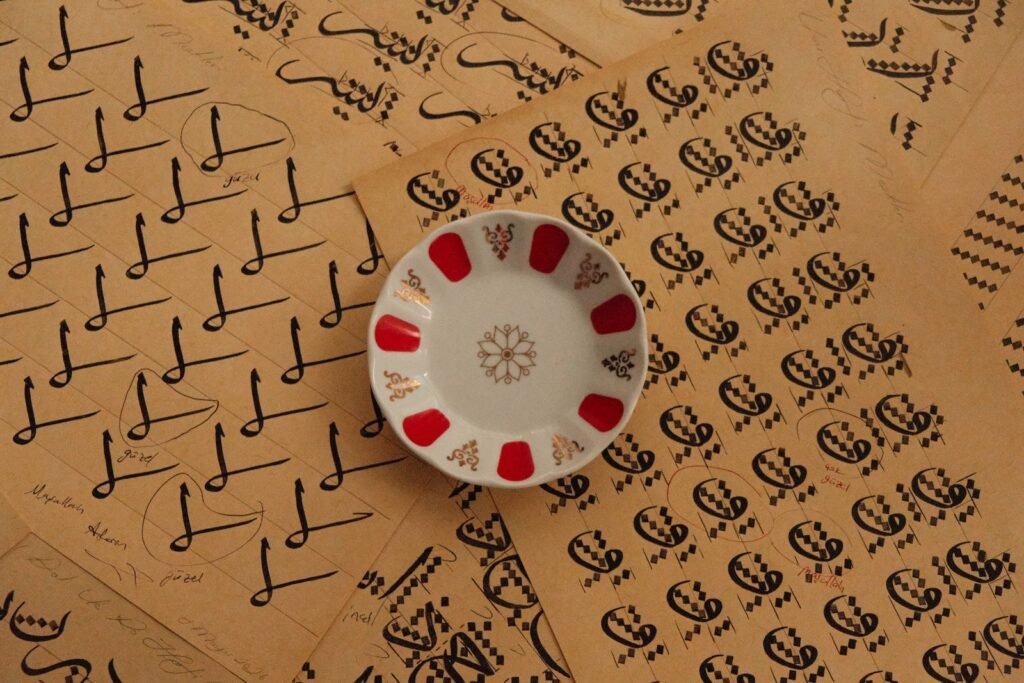
Arabic is written from right to left, in a joined-up script where most letters change shape depending on whether they come at the beginning, in the middle or at the end of a word. That sounds like a lot to learn, but the system is very regular.
- There are 28 letters, and many share the same basic shape, told apart only by dots: ب, ت and ث are the same curve with one, two or three dots.
- Only six letters never join the letter after them: ا د ذ ر ز و. Learn these six and the joining rules become simple.
- Arabic letters represent sounds consistently, so once you know the letters and the vowel marks, you can read any vowelled word aloud, even one you have never seen.
Most of our students read simple vowelled words within a few weeks. Our step-by-step course to learn to read Arabic takes you through the script in six stages, from letter families to a short passage.
New sounds that English does not have
A few Arabic sounds are made deep in the throat or at the back of the mouth, and English has no equivalent. They are the main reason beginners feel Arabic is hard to pronounce. The good news is that there are only a handful of them, and they become natural with daily listening. Listen to each word below several times; the clips are computer-generated, so also copy a teacher or native speaker when you can.
| Arabic | Say it | Meaning | Listen |
|---|---|---|---|
| عَيْن | ʿayn | eye; the letter ع, a squeeze in the throat | |
| حُبّ | ḥubb | love; the letter ح, a strong breathy h | |
| خُبْز | khubz | bread; the letter خ, like “ch” in Scottish “loch” | |
| غَرْب | gharb | west; the letter غ, close to a French “r” | |
| قَلْب | qalb | heart; the letter ق, a k from deep in the throat | |
| صَبَاح | ṣabāḥ | morning; the letter ص, a heavy “s” |
Some of these sounds change the meaning of a word completely. قَلْب (qalb, heart) and كَلْب (kalb, dog) differ only in their first letter, so it is worth getting them right early. Do not aim for perfection on day one: aim to hear the difference first, and your mouth will follow.

Short vowels you usually cannot see
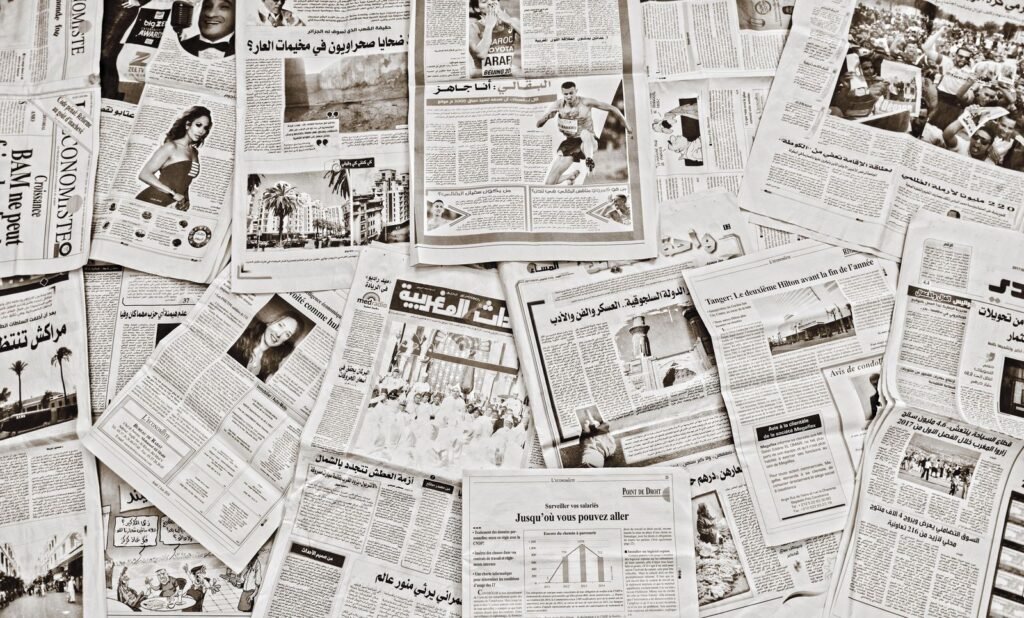
Arabic writes its long vowels as letters, but the short vowels (a, i, u) are small marks above or below the letters. Children’s books, the Quran and learner materials show them. Newspapers, signs, novels and messages almost never do.
That means the same three letters can be read in different ways. Look at كتب without vowel marks: depending on the vowels, it can be كَتَبَ (kataba, he wrote), كُتُب (kutub, books) or كُتِبَ (kutiba, it was written). Native readers know which one is meant from the context.
This is genuinely one of the harder parts of Arabic, and the solution is time: read vowelled texts first, then texts with fewer marks, and your brain gradually learns to fill in the vowels on its own. It is exactly the path of the final stages of our reading course.
Modern Standard Arabic and the dialects
The biggest surprise for many learners is that Arabic speakers use two kinds of Arabic. Modern Standard Arabic is used in books, news, official documents and formal speeches, and it is the same everywhere. At home, at the market and with friends, people speak a dialect: Moroccan Darija, Egyptian, Levantine, Gulf and others. Dialects can be quite different from each other and from the standard language.
Linguists call this situation diglossia, and it means a learner eventually needs some of both. The practical solution is to choose based on your goal:
- For reading, writing, the Quran or study: start with Modern Standard Arabic.
- For a trip or family conversations in one country: start with that country’s dialect, for example Moroccan Darija.
- For both: build a solid base in one, then add the other. Everything you learn in one helps with the other, because they share the script, the roots and most of the core vocabulary.
The same phrase in four varieties
Here is how three everyday phrases sound in Modern Standard Arabic and in three widely spoken dialects. Some words are close, others look completely different. This is why we recommend choosing one variety for speaking and staying with it at first.
| Meaning | Modern Standard | Moroccan Darija | Egyptian | Levantine |
|---|---|---|---|---|
| How are you? (to a man) | كَيْفَ حَالُكَ؟ kayfa ḥāluk | كيف داير؟ kif dayer | إزيك؟ izzayyak | كيفك؟ kīfak |
| What? | مَاذَا؟ mādhā | شنو؟ shnu | إيه؟ ēh | شو؟ shū |
| I want | أُرِيدُ urīdu | بغيت bghit | عايز ʿāyez | بدي biddī |
Notice that the standard forms are understood everywhere, even where people do not use them in conversation. That is one more reason MSA is a strong foundation, while a dialect is what makes you sound at home in one country.
Grammar: what takes time
Arabic grammar is logical, but it marks things that English does not. These are the points that take most learners some time.
Masculine and feminine
Every noun is masculine or feminine, and verbs, adjectives and even the word “you” change accordingly. You say أَنْتَ (anta) to a man and أَنْتِ (anti) to a woman.
The dual
Besides singular and plural, Arabic has a special form for exactly two of something: كِتَابَانِ (kitābān, two books).
Broken plurals
Many plurals change the inside of the word rather than adding an ending, a bit like English “man” and “men”, but much more often: كِتَاب becomes كُتُب, وَلَد (walad, boy) becomes أَوْلَاد (awlād), and بَيْت (bayt, house) becomes بُيُوت (buyūt).
The verb system
Verbs change for the person, gender and number, and they come in ten common patterns. It looks big, but it is extremely regular. Our guides to Arabic verb conjugation and the ten Arabic verb forms show how a few patterns explain thousands of verbs.
What is easier than you think
Now the good news. Several features of Arabic make it surprisingly friendly once you get started.
Roots make vocabulary easier
Most Arabic words grow from a root of three consonants that carries a basic meaning. The root ك ت ب (k-t-b) is about writing, and look at the family it produces:
| Arabic | Say it | Meaning | Listen |
|---|---|---|---|
| كَتَبَ | kataba | he wrote | |
| كِتَاب | kitāb | book | |
| كَاتِب | kātib | writer | |
| مَكْتَب | maktab | office, desk | |
| مَكْتَبَة | maktaba | library, bookshop | |
| مَكْتُوب | maktūb | written; a letter |
Once you know the root and a handful of patterns, you can often guess the meaning of a new word, and remembering vocabulary becomes much easier than memorising unrelated English words.
No verb “to be” in the present
In the present tense, Arabic simply puts the words side by side: أَنَا طَالِبٌ (anā ṭālib) means “I am a student”, literally “I student”. Many beginners find this a relief.
You already know some Arabic
English has borrowed many words from Arabic: coffee from قَهْوَة (qahwa), sugar from سُكَّر (sukkar), algebra from الْجَبْر (al-jabr), zero from صِفْر (ṣifr). Our free book, You Already Speak Arabic, tells the story of 50 of them, a fun way to see how close the two languages sometimes are.
How to make Arabic easier from day one
- Choose your goal and your variety. MSA, a dialect or Quranic Arabic: decide first, so every hour counts.
- Learn the script in the first weeks. Transliteration feels easier but holds you back. A few weeks with the alphabet make everything else faster.
- Listen every day. Ten minutes of audio a day trains your ear for the new sounds better than one long session a week.
- Study roots and patterns, not just lists. Group new words by root and you will remember more with less effort.
- Speak early, even badly. Short, regular conversations with a teacher or partner build the confidence that books alone cannot.
- Measure your progress. Take our free Arabic level test to see your level and the skills to work on next.
Arabic rewards patience. The first months ask for real effort, and then the language starts to open up: you recognise roots, you read signs, and you hear the difference between قَلْب and كَلْب without thinking. That is the moment most learners stop asking “is Arabic hard to learn?” and start enjoying it.
A first week to try
If you want to test Arabic before committing, give it seven days, about 20 minutes a day:
- Days 1–2: the first ten letters and their sounds.
- Days 3–4: the short vowel marks, and reading your first three-letter words.
- Day 5: five greetings, said aloud with audio.
- Day 6: the k-t-b word family above, written by hand.
- Day 7: review, then read a few words from a menu, sign or book cover.
At the end of the week you will know whether you enjoy the challenge, and you will have taken the first real step.
Frequently asked questions
What is the hardest part of Arabic for English speakers?
For most learners it is the combination of new throat sounds and unwritten short vowels. Both improve steadily with daily listening and reading practice, starting with vowelled texts.
Is Arabic harder than Chinese or Japanese?
The Foreign Service Institute places Arabic in the same group as Chinese, Japanese and Korean: the languages that take English speakers the longest. Arabic has an easier script than Chinese characters, but its own challenges with sounds and dialects.
Is Moroccan Darija easier than Modern Standard Arabic?
For speaking, often yes: everyday Darija uses simpler grammar and many familiar borrowed words. For reading and writing, Modern Standard Arabic is the foundation you need.
How long does it take to learn Arabic?
It depends on your goal. Reading the script takes a few weeks, simple conversations take a few months of regular study, and fluency takes several years. The Foreign Service Institute estimates about 2,200 class hours for professional proficiency, studying full time.
Do I need to learn grammar to speak Arabic?
You can learn your first phrases without grammar, but within a few months grammar becomes the fastest way forward, especially verbs and the masculine and feminine forms. Learn it in small doses, always with examples.
Can I learn Arabic as an adult?
Yes. Adults learn Arabic successfully all the time. They often progress faster than children at first because they can understand grammar and organise their study.
Should I learn Arabic with transliteration?
Transliteration is useful for your first phrases, but learning the script early is the better long-term choice: it improves your pronunciation and lets you read real Arabic.