Table of Contents 8 sections
Arabic breakfast vocabulary is one of the easiest word sets to make useful right away. The words are concrete, you can point to most of them, and the same small group comes up at home, in a hotel, and at a cafe. This guide gives you the Arabic breakfast vocabulary first, then the phrases that help you use them naturally.
Most of the vocabulary is Modern Standard Arabic, with regional names included where they are the words people actually use for a dish. Learn the general word, listen to the pronunciation, and then pay attention to what people in your region call the food on the table.
Bread and bakery
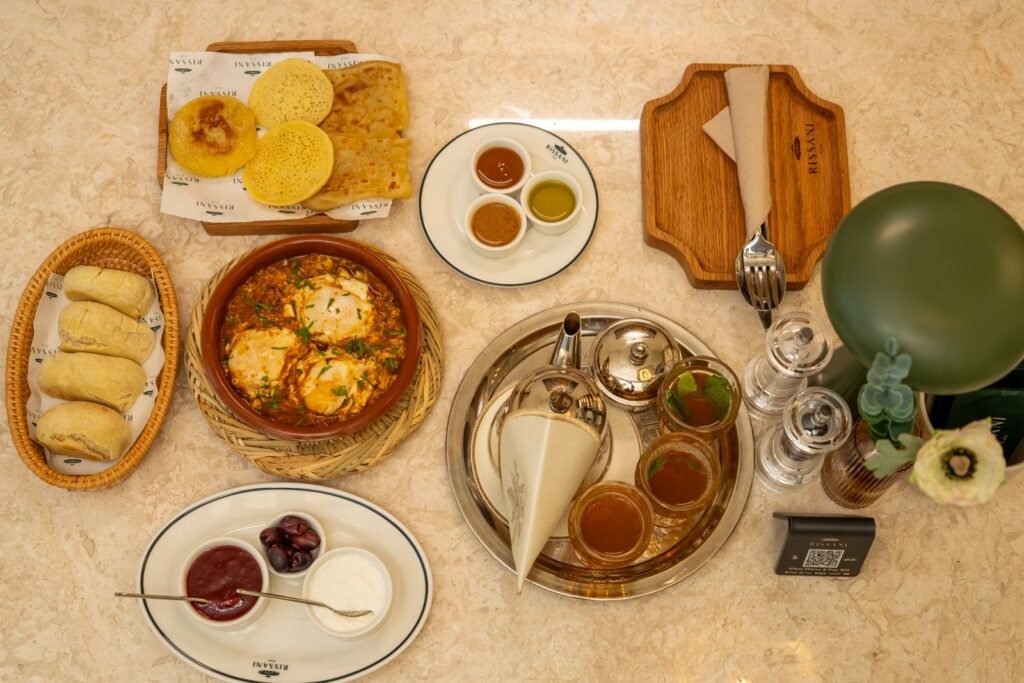
Bread is the reliable starting point for an Arabic breakfast. The general word is useful everywhere, but local bakeries quickly add more specific names to your vocabulary.
| Arabic | Transliteration | Meaning | Listen |
|---|---|---|---|
| خبز | khubz | bread; the general word | |
| خبز التوست | khubz at-tōst | toast or sliced sandwich bread | |
| كعك | kaʿk | a ring-shaped bread or sesame-coated cookie, depending on the region | |
| مناقيش | manāqīsh | flatbread topped with zaʿtar, cheese, or meat | |
| فطيرة | faṭīra | a sweet or savory filled pastry |
Eggs and dairy
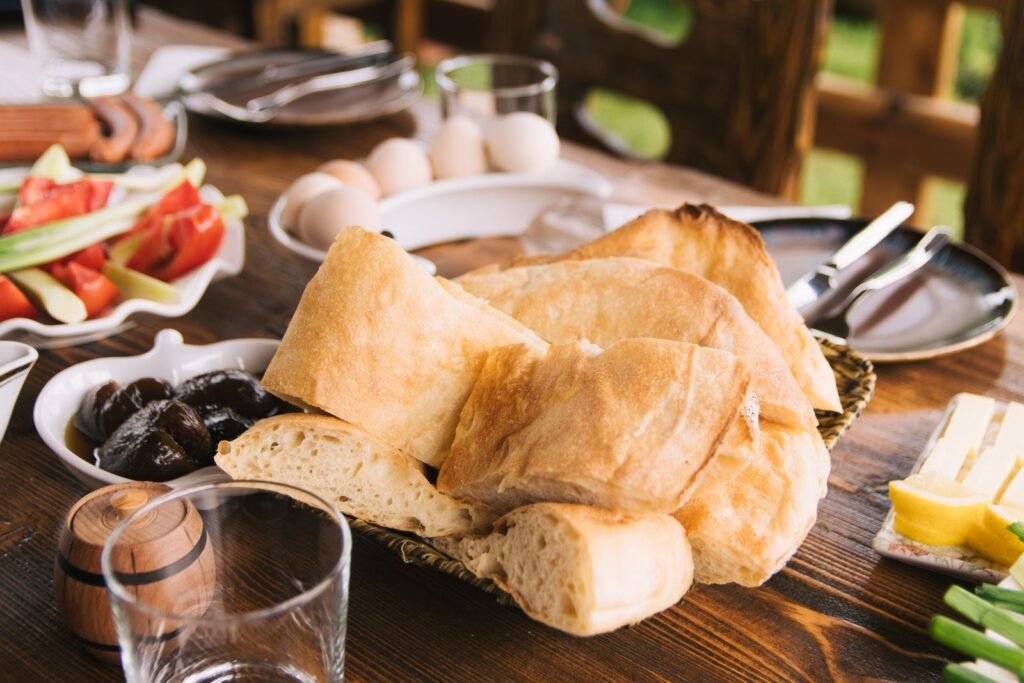
These are the words you will hear when someone asks what you want with your bread. Notice that some food vocabulary changes meaning across dialects, especially the word for milk and yogurt.
| Arabic | Transliteration | Meaning | Listen |
|---|---|---|---|
| بيض | bayḍ | eggs | |
| بيض مقلي | bayḍ maqlī | fried eggs | |
| بيض مسلوق | bayḍ maslūq | boiled eggs | |
| جبن | jubn | cheese | |
| لبن | laban | milk or yogurt, depending on the region | |
| حليب | ḥalīb | milk; especially useful when لبن is ambiguous | |
| زبدة | zubda | butter |
Spreads and sweet items
A few small additions can change the whole meal. These words are useful when describing what you want on bread or asking what is available.
| Arabic | Transliteration | Meaning | Listen |
|---|---|---|---|
| عسل | ʿasal | honey | |
| مربى | murabbā | jam or preserve | |
| طحينة | ṭaḥīna | tahini; sesame paste | |
| زيت زيتون | zayt zaytūn | olive oil |
Savory breakfast staples
These foods show up especially often in regional breakfasts. The word فول, for example, may be the first thing you hear when breakfast in Egypt comes up.
| Arabic | Transliteration | Meaning | Listen |
|---|---|---|---|
| زيتون | zaytūn | olives | |
| زعتر | zaʿtar | zaʿtar; a thyme, sumac, and sesame spice blend | |
| فول | fūl | fava beans, especially fūl medames | |
| حمص | ḥummuṣ | chickpeas; also used for hummus in everyday speech |
Drinks
Drinks are an easy way to practise a complete request: combine one of these nouns with a phrase such as أريد (urīdu, “I want”) or هل عندكم (hal ʿindakum, “do you have?”).
| Arabic | Transliteration | Meaning | Listen |
|---|---|---|---|
| شاي | shāy | tea | |
| قهوة | qahwa | coffee | |
| عصير | ʿaṣīr | juice | |
| عصير برتقال | ʿaṣīr burtuqāl | orange juice |
Using Arabic breakfast vocabulary at the table
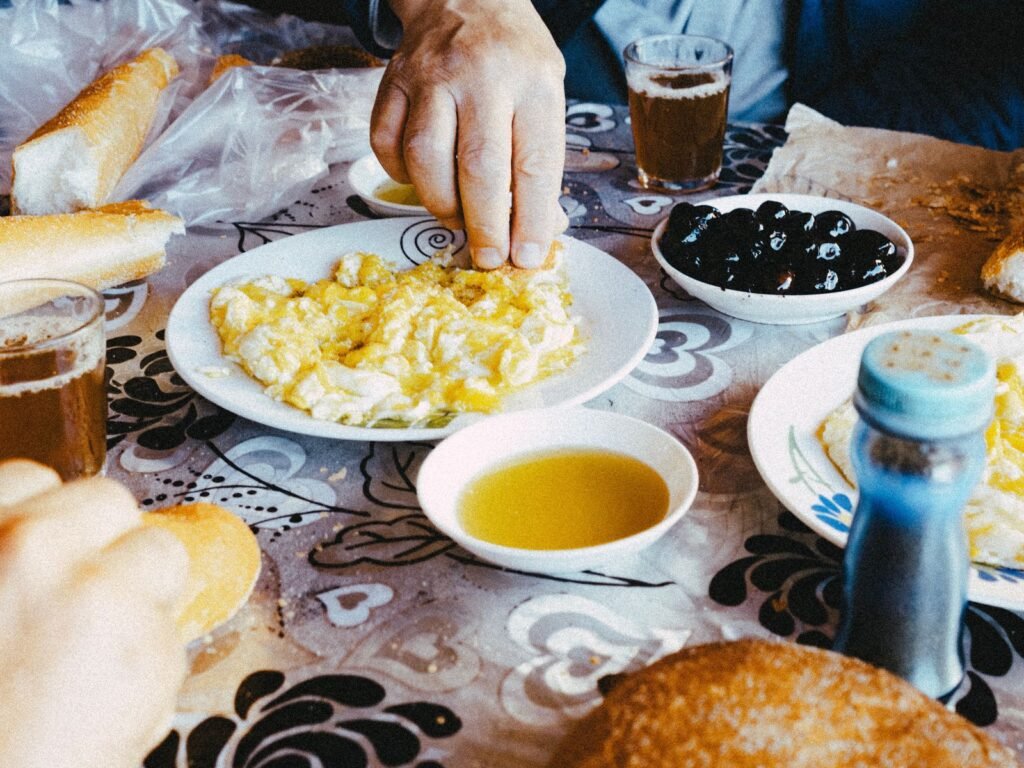
Vocabulary becomes much easier to remember when it lives inside a small exchange. Read this dialogue slowly, then replace the food and drink with your own choices.
After a meal, you may also hear بالهناء والشفاء (bil-hanāʾ wash-shifāʾ), a warm expression meaning something like “enjoy your meal” or “may it do you good.”
| Arabic | Transliteration | Meaning | Listen |
|---|---|---|---|
| بالهناء والشفاء | bil-hanāʾ wash-shifāʾ | enjoy your meal; may it do you good |
How breakfast changes by region
The general vocabulary will help you everywhere, but the actual breakfast spread changes dramatically from one country to another.
- Egypt: فول (fūl, stewed fava beans) and طعمية (ṭaʿmiyya, Egyptian falafel) are commonly served with bread.
- The Levant: لبنة (labneh), olive oil, zaʿtar, and manakish are familiar breakfast choices in Lebanon, Syria, Jordan, and Palestine.
- The Gulf: foods such as بلاليط (balālīṭ, sweet vermicelli with egg) and تشاب (chabāb, a light sweet pancake) may appear alongside tea.
- North Africa: mint tea is often served with foods such as مسمن (msemmen, layered flatbread) or بغرير (baghrir, a spongy semolina pancake).
Frequently asked questions
Is this Arabic breakfast vocabulary Modern Standard Arabic or dialect?
It is mainly MSA, with common regional food names included because those names are often used even when the surrounding conversation is formal. Once you know the country or community you are speaking with, add its everyday pronunciation and vocabulary.
Why does لبن mean different things?
It is a genuine regional difference. In some varieties it refers to milk, while in Levantine Arabic it commonly refers to yogurt. Context usually helps, but حليب is a useful word to know when you specifically mean milk.
What is the difference between فطيرة and مناقيش?
فطيرة is a broad word for a filled pastry, either sweet or savory. مناقيش usually means an open flatbread baked with toppings such as zaʿtar or cheese.
How do I ask for something that is not on the list?
Use أريد… (urīdu…, “I want…”) with the food name, or ask هل عندكم…؟ (hal ʿindakum…?, “do you have…?”) when you are not sure it is available.
Is بالهناء والشفاء polite to say after a meal?
Yes. It is a warm expression used to wish someone enjoyment and wellbeing from the food. Exact usage varies by region, but the sentiment is friendly and familiar.